Rafael Hayes · 14 October 2026
Biodiversity Conservation Through Traditional Pasture Management in Slovenia's Upper Savinja Valley
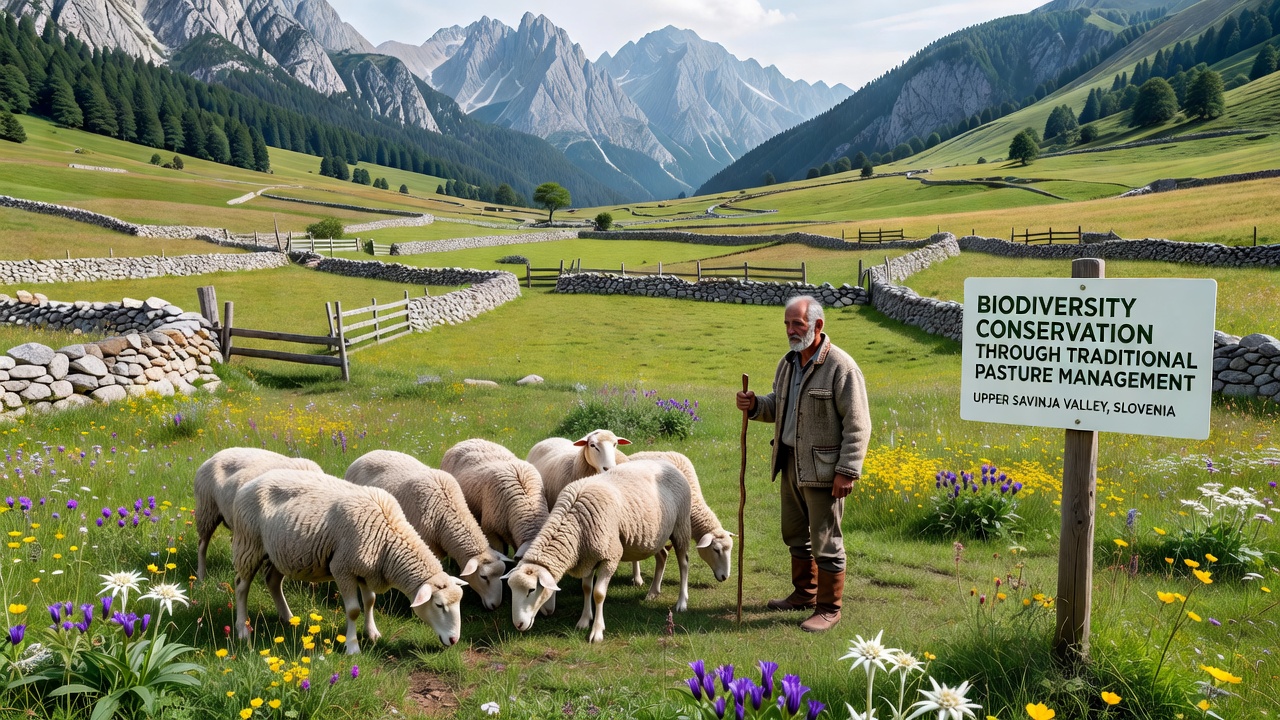
Slovenia's Upper Savinja Valley stretches across the alpine foothills where centuries of livestock grazing have shaped open meadows that support a wide range of plant and insect species. Farmers rotate herds of cattle and sheep between summer pastures at higher elevations and lower fields near the Savinja River, a pattern that prevents woody shrubs from overtaking grasslands while allowing seasonal wildflowers to complete their life cycles. Observers note that this cycle maintains habitat patches for pollinators and ground-nesting birds that disappear when meadows are either abandoned or converted to intensive monoculture.
Geographic and Ecological Setting
The valley lies in northern Slovenia near the Austrian border and features a mix of limestone slopes, glacial moraines, and river terraces that create varied microclimates. Elevation ranges from roughly 400 meters in the valley floor to over 2,000 meters on surrounding peaks, so growing seasons shorten dramatically with altitude. Soil types range from shallow rendzinas on limestone to deeper cambisols along streams, and these differences support distinct plant communities that traditional grazing helps preserve. Researchers from the University of Ljubljana have recorded more than 80 vascular plant species per square meter in long-managed hay meadows, a richness that drops sharply once regular cutting and grazing cease.
Traditional Pasture Practices
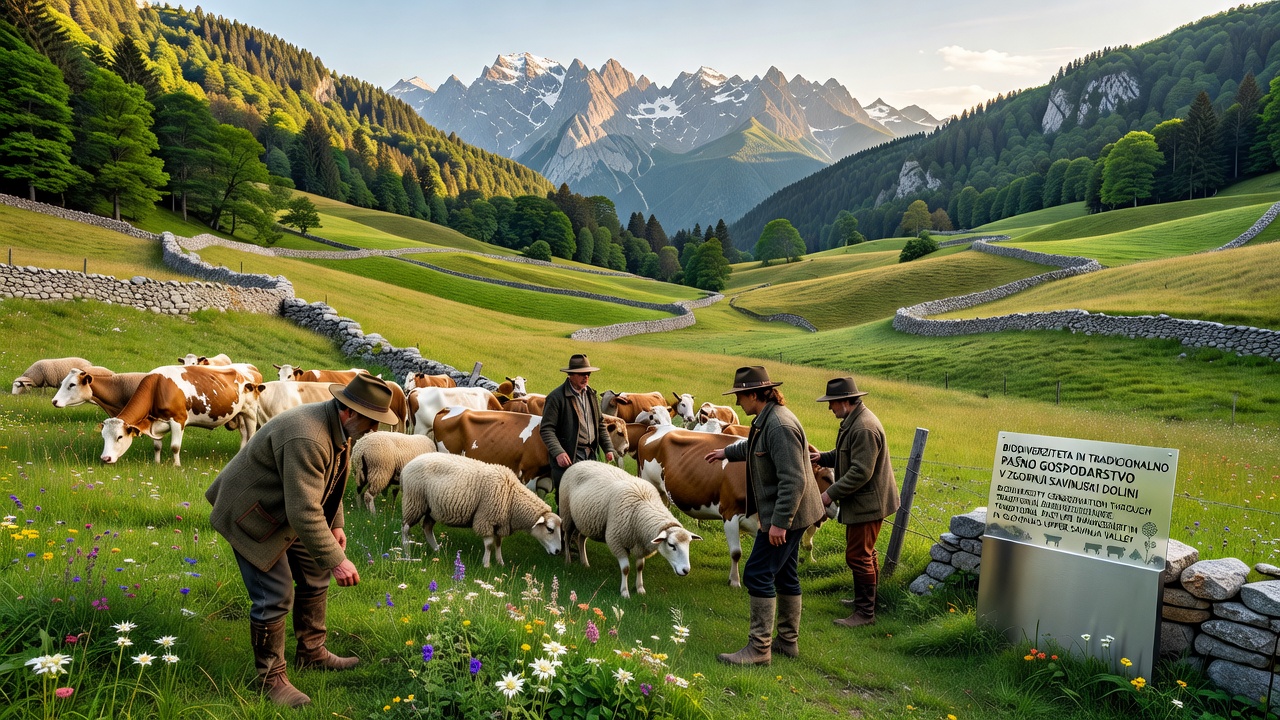
Local herders still follow a transhumance schedule that begins in late spring when snowmelt opens the high pastures. Animals move upward in stages, grazing each section for several weeks before the group advances, and they return to lower meadows in autumn for the final hay harvest. Manure is left in place rather than collected, which recycles nutrients and creates small nutrient hotspots that favor certain orchids and legumes. Fences remain minimal, so livestock roam freely within defined boundaries, trampling some seedlings while sparing others and thereby maintaining a mosaic of short turf, taller herbs, and bare soil patches. One family near Solčava has kept the same rotation pattern documented in 19th-century land records, demonstrating continuity that modern monitoring shows correlates with stable populations of butterflies such as the scarce large blue.
Documented Biodiversity Outcomes
Surveys conducted by the Slovenian Environment Agency indicate that traditionally managed pastures host significantly higher numbers of indicator species than either abandoned land or fertilized fields. Vascular plant diversity averages 65 species per 100 square meters under rotational grazing, while abandoned sites show rapid encroachment by spruce and alder that shades out light-demanding herbs within a decade. Insect counts reveal parallel patterns: hoverfly and wild bee richness peaks where grazing intensity remains moderate, and bird censuses record consistent breeding pairs of whinchat and red-backed shrike on parcels that receive annual late-summer mowing after seed set. These figures align with broader European data compiled by the European Environment Agency, which tracks similar trends across Natura 2000 sites that rely on low-intensity agriculture.
Challenges and Contemporary Adaptations
Depopulation of remote farmsteads has reduced the number of active herders, and some parcels now receive only sporadic grazing. In response, the local agricultural cooperative has organized communal herding teams that combine livestock from several owners, preserving the rotation even when individual farms shrink. EU agri-environment payments support farmers who commit to maintaining traditional mowing dates and stocking rates, and compliance monitoring uses satellite imagery supplemented by ground checks each summer. A new monitoring protocol scheduled to begin in October 2026 will track changes in soil carbon and pollinator abundance across 12 permanent transects, providing updated baseline data for adaptive management. Meanwhile, tourism operators promote pasture walks that generate supplementary income, reducing pressure to intensify or abandon the land.
Conclusion
Traditional pasture management in the Upper Savinja Valley continues to deliver measurable conservation benefits by sustaining the open habitats that support high plant, insect, and bird diversity. Ongoing adjustments, including cooperative herding and payment schemes tied to specific practices, show how historic methods can persist alongside contemporary economic realities. Continued observation through 2026 and beyond will clarify whether these measures remain sufficient as climate patterns shift and visitor numbers grow.