Rafael Hayes · 28 October 2026
Cross-Border Trade Routes Shaped Artisan Communities in Slovenia's Northern Alps
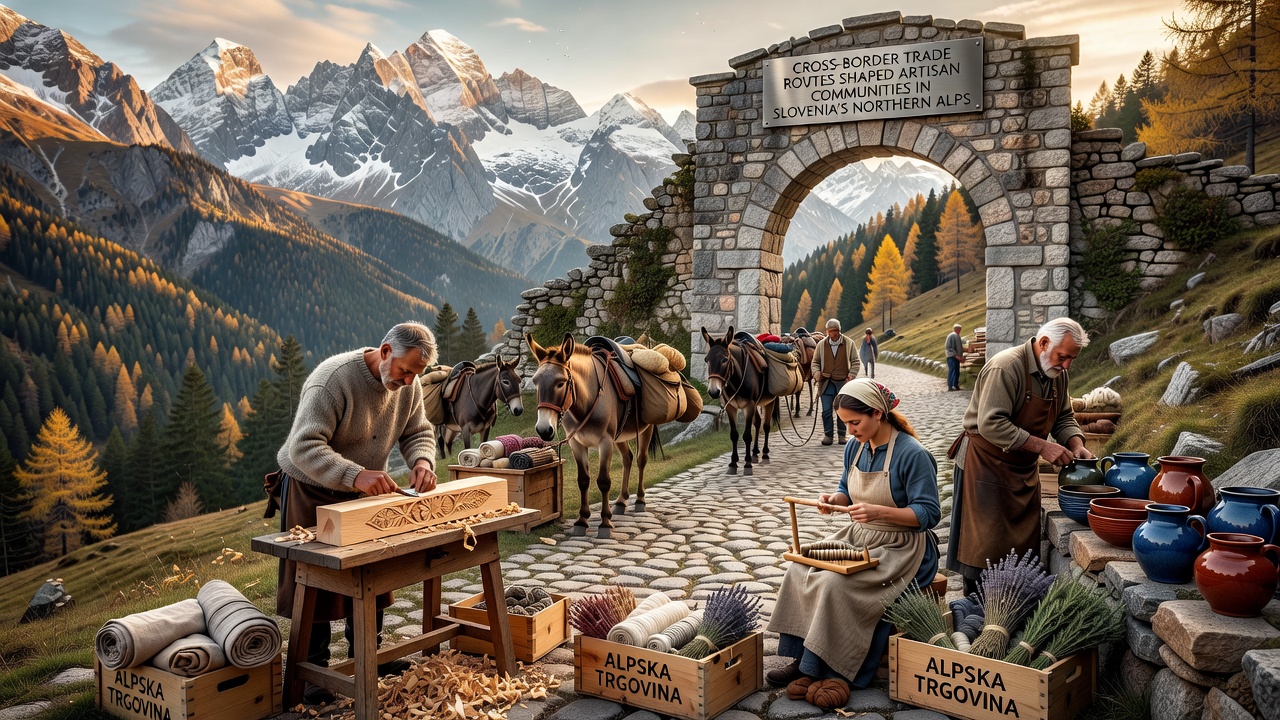
Trade routes crossing the northern Alps have connected Slovenia with neighboring regions for centuries, and these pathways carried goods, techniques, and materials that directly influenced local artisan production. Merchants moved iron, wool, and timber along passes linking the Soča Valley and Upper Carniola to Austrian and Italian markets, while artisans adapted their work to meet demand from both sides of the borders.
Early Trade Networks and Material Exchanges
Archaeological records show that Roman-era roads through the Julian Alps facilitated the movement of metals and textiles, and later medieval routes built upon these foundations. Data from regional surveys indicate that by the 14th century, iron from Carinthian mines reached blacksmiths near Jesenice, where they forged tools and hardware for export back across the mountains. Woodcarvers in the same areas received oak and beech from Italian traders, which allowed them to expand beyond local furniture into decorative panels sold at fairs in Villach and Trieste.
Textile artisans benefited as well. Wool from alpine pastures traveled south, and dyestuffs arrived from the Adriatic, leading to new color palettes in woven goods produced around Radovljica. Researchers at the University of Ljubljana have documented how these exchanges created specialized workshops that combined Alpine carving traditions with Venetian metal inlay methods.
Artisan Specializations Along Key Passes
Communities situated near the Koritnica and Predil passes developed distinct skills tied to passing traffic. One study revealed that families in the upper Soča region concentrated on leather goods because traders needed durable saddles and bags for the steep terrain. Meanwhile, potters near Bohinj incorporated glaze recipes learned from Austrian potters who stopped at the same inns, and their output increased during peak trading seasons.
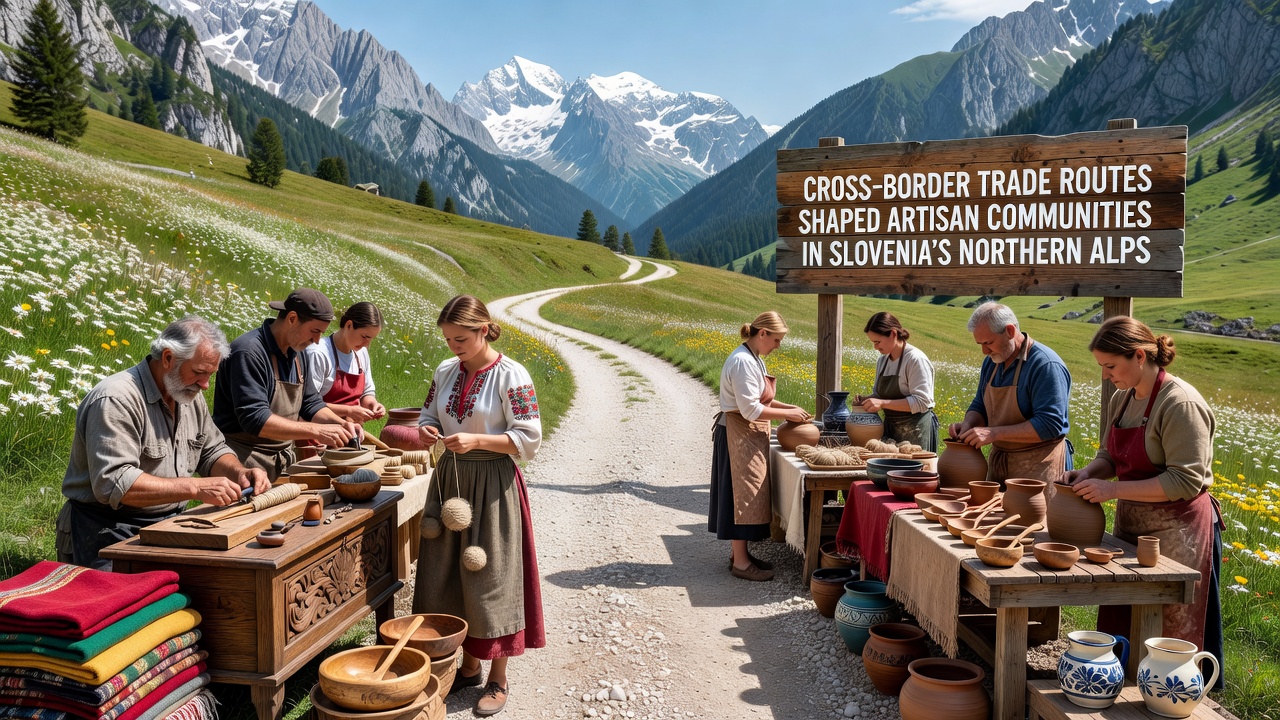
Observers note that these patterns continued into the 19th century. Customs ledgers from the Habsburg period list shipments of carved wooden utensils heading toward Austrian cities while returning wagons carried glass beads and pigments used by local lacemakers. The volume of traffic supported seasonal markets where artisans sold directly to merchants, and this direct contact shaped product designs to suit foreign tastes.
19th and 20th Century Shifts
Industrial rail lines reduced some mountain traffic after 1870, yet artisan communities retained connections through smaller cross-border routes. Figures from Slovenian statistical offices show continued exports of handmade ironwork and textiles into the early 1900s. After World War II, new border regulations altered flows, but informal exchanges persisted along trails used by local traders. Academic papers from the Austrian Academy of Sciences describe how these routes helped preserve craft knowledge during periods of political separation.
By the late 20th century, European integration reopened many historical paths. EU-funded heritage projects now document surviving workshops, and tourism along the former trade corridors provides new outlets for artisans. In October 2026, several municipalities plan coordinated exhibitions highlighting these routes, drawing on archival material from both Slovenian and Italian collections.
Contemporary Documentation and Preservation
Current mapping efforts combine historical records with GPS surveys of old trails. Evidence from these projects indicates that artisan clusters remain concentrated near former customs points, where access to multiple markets once supported diverse production. Government reports from the Slovenian Ministry of Culture track ongoing training programs that teach traditional techniques alongside modern business practices suited to international buyers.
What's interesting is how material supply chains still echo older patterns. Timber for carving continues to move from Austrian forests into Slovenian workshops, while finished pieces travel to galleries across the Alps. Researchers continue to examine how these persistent links maintain specialized skills in communities that might otherwise have shifted to other economic activities.
Conclusion
Cross-border trade routes established lasting frameworks for artisan activity across Slovenia's northern Alps. The movement of materials and ideas along these paths created specialized workshops whose products reflected connections to wider European markets. Ongoing documentation and heritage initiatives ensure that the influence of these historical networks remains visible in both preserved artifacts and contemporary craft production.